The short answer
In Arizona, rock excavation typically runs $150–$600 per cubic yard and controlled blasting typically runs $12–$40 per cubic yard of shot rock, plus mobilization and permits. Where you land inside those ranges depends almost entirely on rock hardness, volume, and site access. Anybody quoting a hard number without walking the site is guessing.
What actually drives the price
- Rock hardness and fracture. Weathered caliche breaks with a bucket. Solid basalt or granite needs a breaker or powder. The harder and more massive the rock, the higher the yard price — no way around it.
- Volume. Fixed costs (mobilization, licensed blaster, permit, seismographs) get spread across the job. A 20-yard pool shot costs more per yard than a 2,000-yard commercial pad.
- Access. Can a 950M loader and haul trucks get to the work? Or does everything move through a 3-foot gate with a mini excavator? Access can double or triple production hours on the same volume of rock.
- Haul-off. Spoils have to go somewhere. Short haul to an on-site stockpile is cheap. Long haul to a distant dump with tipping fees adds up fast.
Excavation vs. blasting — which one do you need?
Excavation with a hydraulic breaker is the default for small volumes, sensitive neighbors, or rock softer than about 15,000 psi. It's slower per yard, but the fixed cost is lower and there's no powder involved.
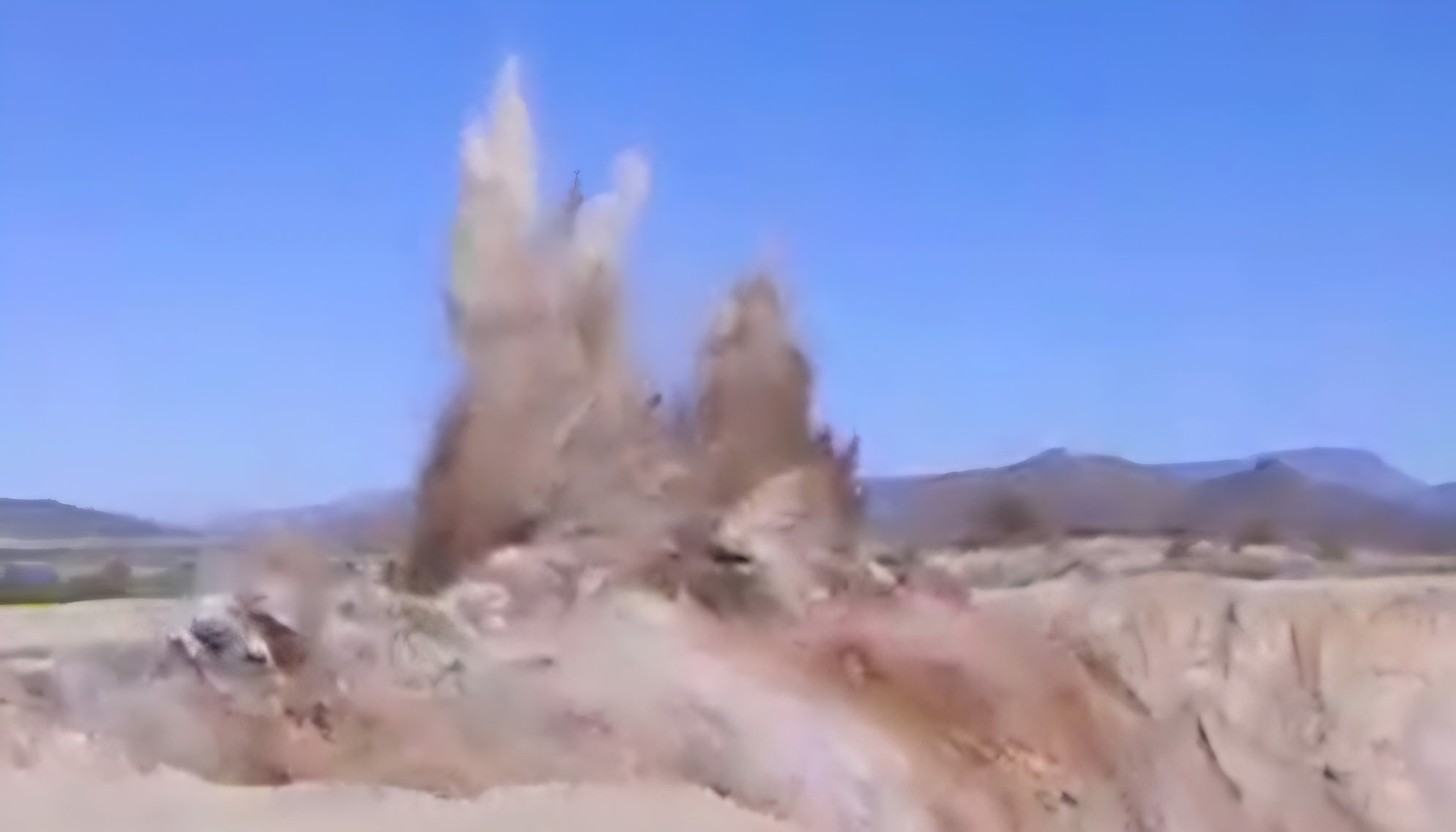
Blasting wins as soon as the breaker slows down. Once a hammer isn't moving a yard an hour, every additional hour is dead money. A properly engineered shot fractures the entire volume in one event and the excavator loads it out like ordinary dirt. On competent Arizona rock — most granite, basalt, and welded tuff — blasting is usually the cheaper answer above 50–100 yards.
Licensing, permits, and neighbors
In Arizona, the contractor doing the blasting must hold a CR-15 blasting license, carry appropriate liability and explosives insurance, and pull a local blasting permit for every shot. On urban jobs we also set up seismic monitoring at the nearest structure so there's a paper trail if a neighbor calls. This is all on the contractor — homeowners never handle it. Ask to see the CR-15 and the permit before any hole gets loaded.
Soards Trucking has been running dirt and rock in Arizona since 1992. We're CR-15 licensed under ROC #230099, family and veteran owned, and every quote comes from a real site visit.
Frequently asked questions
How much does rock excavation cost in Arizona?+
For typical Tucson and Phoenix residential jobs, rock excavation runs roughly $150–$600 per cubic yard depending on rock hardness, access, and how much material has to be hauled off. Soft caliche on an open lot is on the low end. Solid granite behind a finished house with tight access is on the high end. Every real number comes from a site walk — we don't quote hard rock over the phone.
How much does it cost to blast rock?+
Controlled rock blasting in Arizona typically runs $12–$40 per cubic yard of shot rock on production work, plus mobilization, permitting, and any required seismic monitoring. On small residential shots (pools, footings, utility trenches) the per-yard number goes up because fixed costs — the licensed blaster, the permit, the mobilization — get spread across less volume. On big commercial pads it comes down. It is almost always cheaper than hammering the same rock with an excavator-mounted breaker.
When is blasting cheaper than hammering?+
Once rock is harder than roughly 15,000 psi unconfined compressive strength — most Arizona granite, basalt, and welded tuff — a hydraulic breaker slows to inches per hour. At that point you're paying for machine hours, operator hours, and wear parts to move very little dirt. A properly designed shot fractures the whole volume in minutes and the excavator just loads out. The rule of thumb: if a breaker isn't moving a yard an hour, blasting is cheaper.
Do I need a permit to blast rock on my property?+
Yes. In Arizona, the blasting contractor must hold a CR-15 blasting license, carry the required insurance, and pull a local blasting permit (fire marshal / county) for every shot. Homeowners never handle this — the contractor does. Ask to see the CR-15 license and the permit before any powder goes in the hole. Soards Trucking is CR-15 licensed under ROC #230099.
What drives the price the most?+
Four things, in order: (1) rock hardness and how fractured it already is, (2) volume — bigger jobs are cheaper per yard, (3) access — can a loader and haul trucks reach the work, and (4) haul-off distance for the spoils. Permitting, seismic monitoring near neighbors, and utility protection can add real money on tight urban sites.
Can you give a firm quote without visiting the site?+
No, and neither should anyone else. Rock jobs go sideways when a bid is guessed from a photo. We walk the site, look at the rock, check access, and give you a written scope with a firm number. Site visits are free.